No products in the cart.

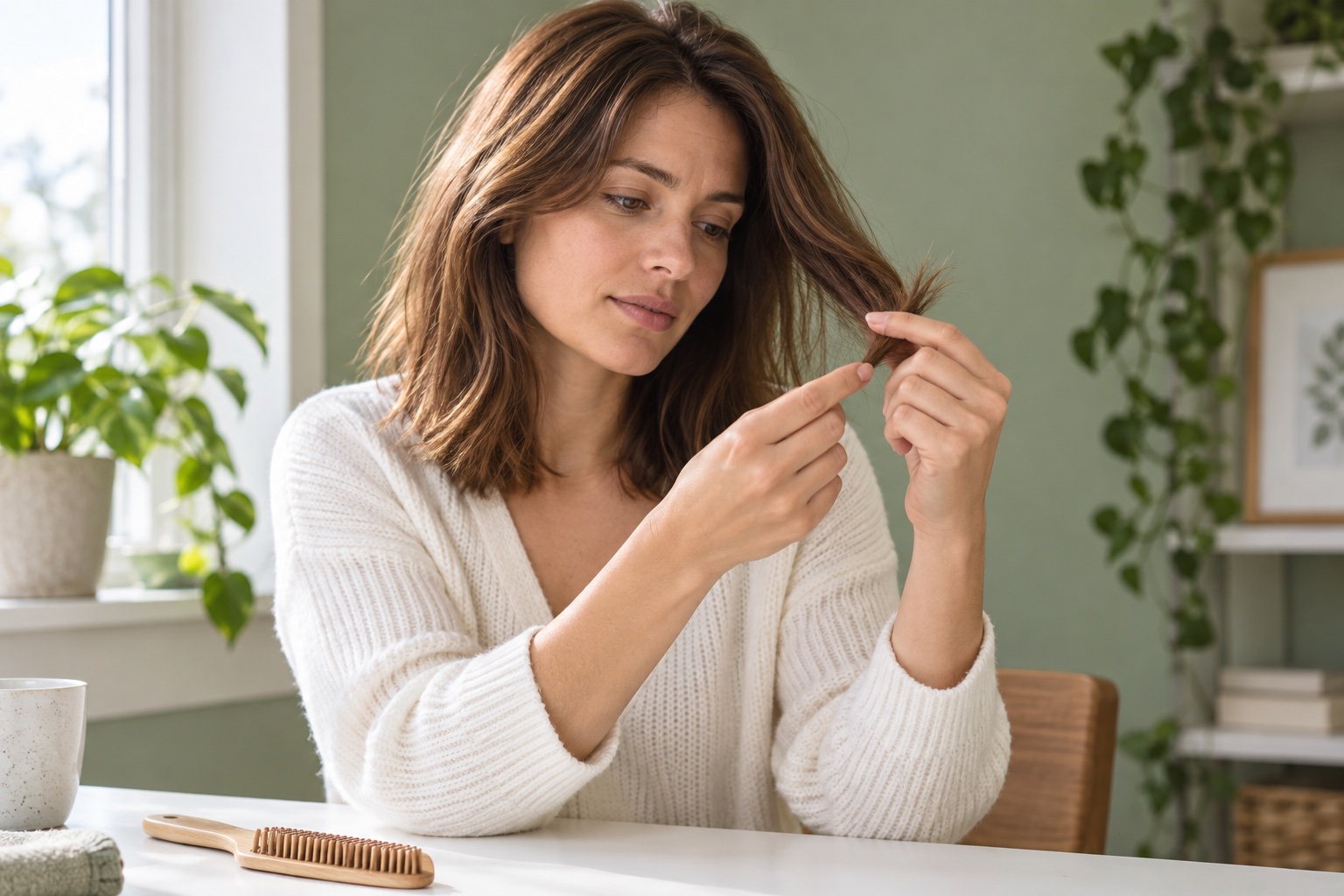
Does Keratin Treatment Damage Hair? The Honest Truth About Smoothing Treatments
By Mauricio Triana, Co-Founder at Satoriia · Published July 9, 2026
It is one of the most-searched questions in hair care, and it deserves a straight answer instead of a sales pitch. You want smooth, frizz-free hair, but you have heard the horror stories: breakage, brittleness, strands snapping off at the brush. So before you spend money or heat on your hair, let us settle it honestly. The reputation smoothing treatments carry is real, but it is also misplaced. The problem was rarely the idea of a keratin treatment. It was what certain formulas put in the bottle and how they were used.
This guide separates the chemical from the process. We will walk through what a keratin treatment actually does at the level of the hair fiber, where the damage genuinely comes from, and how to get the smooth result while keeping your hair healthy.
The short answer: it is the formula, not the idea
So, does keratin treatment damage hair? Not by design. A smoothing treatment, done with a well-made formula and correct technique, is one of the gentler things you can do to unruly hair. The damage people describe almost always traces back to one of three things: an aggressive formula, too much heat, or a treatment used on hair that was already compromised. Separate the chemical from the process and the picture gets clear fast. The idea of coating and smoothing the hair is sound. What matters is what is in the bottle and how you seal it in.
What a keratin treatment actually does to your hair
Your hair is mostly keratin, a structural protein wound into a fiber and wrapped in a shingled outer layer called the cuticle. Frizz happens when that cuticle lifts and strands stop sliding past each other. A keratin smoothing treatment lays a keratin-rich film over the shaft, fills in the roughened surface, and is then set with the heat of a flat iron. The strand ends up smoother, glossier, and more resistant to humidity for several weeks.
Here is the part that answers the damage question at the chemistry level. A true smoothing treatment works on the surface and the weaker internal links of the fiber. It does not need to demolish your hair to work.
The bonds a treatment touches, and the ones it should not
Hair holds its shape through a few kinds of internal bonds. Hydrogen bonds and salt bonds are temporary and reform every time your hair gets wet or dries. Disulfide bonds are the strong, permanent ones that give hair its fundamental structure. A gentle smoothing treatment reorganizes the temporary bonds and conditions the surface. It should not break disulfide bonds. Permanent straighteners and relaxers do break those, which is exactly why they cause lasting change and carry far more risk. If a treatment promises a permanent result, it is doing permanent-level chemistry, and that is where damage lives.
When a keratin treatment does damage hair

A treatment turns damaging when one of these things is true:
- The formula relies on formaldehyde or ingredients that release it when heated.
- The flat iron runs hotter than the hair can safely take, pass after pass.
- The hair was already bleached, over-processed, or breaking before you started.
- Bond-breaking actives are used to force a permanent-straight result.
- Aftercare strips the treatment out early, so you re-treat far too often.
Notice that most of these are not the treatment itself. They are choices layered on top of it. Change the choices and the risk drops sharply.
The real culprit: formaldehyde and excess heat

For years the smoothing category leaned on formaldehyde and formaldehyde-releasing ingredients because they lock hair straight cheaply. When your flat iron hits that formula, it can release formaldehyde gas, a known irritant and a recognized carcinogen. That is the stinging eyes and burning throat some people remember from a salon appointment, and it is genuinely hard on both your hair and the person breathing it.
Watch for formaldehyde and its aliases on labels: methylene glycol, methanediol, formalin, and timonacic acid. Some newer formulas swap in glyoxylic acid, which still relies on high heat and can leave hair feeling rough over time. A brand that hides its actives behind vague botanical language is not being honest with you. The safest smoothing you can do is with a formaldehyde-free treatment used at a sensible temperature.
How to get smooth hair without the damage
You can have the smooth result and keep your hair healthy. A few honest rules do most of the work:
- Choose a formaldehyde-free treatment and read the full ingredient list before you buy.
- Match your flat iron temperature to your hair, not to the dial. Fine or color-treated hair needs less heat than coarse, resistant hair.
- Never treat over fresh bleach or actively breaking hair. Repair first, smooth second.
- Protect the result with a sulfate-free, salt-free shampoo so you re-treat less often.
- Space treatments out. More frequent is not smoother, it is just more heat.
If your hair is already damaged, repair before you smooth
If your strands are dry, brittle, or no longer holding a style, a smoothing treatment is not the fix. Rebuild the fiber first — here is how to repair damaged hair. Our repair-focused Stay Real treatment was built for exactly this: it smooths the cuticle and restores the lipid layer without the harsh chemistry that damages the fiber, so damaged hair behaves like itself again before you ever consider a transformation. Treat the damage, then decide whether you even want to smooth on top of it.
Signs your treatment is helping, not hurting

Healthy smoothing looks and feels a specific way. Your hair should stay soft and movable, not stiff or glassy. It should still have shine that comes from a smoothed cuticle rather than a flat, lifeless coating. You should see less frizz and faster drying, but your hair should not snap, shed in clumps, or feel like straw. If it does, the formula or the heat was too aggressive, and that is worth correcting before your next treatment.
Frequently Asked Questions
Does keratin treatment damage hair?
Not on its own. A well-made, formaldehyde-free treatment applied at the right temperature smooths the cuticle without breaking the strong disulfide bonds that give hair its structure. Damage usually comes from harsh formulas, excessive heat, or treating hair that was already compromised, not from the concept of smoothing itself.
Is a keratin treatment safe for already-damaged hair?
A traditional smoothing treatment is not the right first step for dry, brittle, or breaking hair. Rebuild the fiber first with a repair treatment such as Stay Real, then reassess. Smoothing over damage tends to mask it briefly rather than fix it.
Does a keratin treatment break the bonds in your hair?
A gentle smoothing treatment reorganizes temporary hydrogen and salt bonds and conditions the surface. It should not break disulfide bonds. Permanent straighteners and relaxers do break those, which is why they cause lasting structural change and carry more risk.
Why do some keratin treatments cause breakage?
Breakage typically comes from formaldehyde-based formulas, a flat iron set too hot for the hair type, or bond-breaking actives used to force a permanent-straight result. Combine any of those with previously bleached hair and the risk climbs quickly.
How is a formaldehyde-free keratin treatment different?
A formaldehyde-free treatment smooths and seals the cuticle with heat without relying on formaldehyde or its releasers, such as methylene glycol or methanediol. You get the smoothing benefit without the fumes, the eye irritation, or the carcinogen exposure linked to older formulas.
Is glyoxylic acid a safe alternative to formaldehyde?
Glyoxylic acid is marketed as a substitute, but it still depends on high heat to work and can leave hair feeling rough or dry over repeated use. We prefer formulas that do not rely on it. Read the full ingredient list and be cautious of any active hidden behind vague botanical language.
How often can you get a keratin treatment without damaging hair?
Space treatments out and let your results wear naturally, usually every eight to twelve weeks depending on your hair and aftercare. Re-treating too frequently adds heat exposure without adding smoothness, which is where cumulative damage starts.
What should I do if my hair feels damaged after a keratin treatment?
Stop heat styling, switch to a sulfate-free and salt-free shampoo, and focus on repair before any further smoothing. A cuticle-repairing treatment like Stay Real can restore softness and flexibility. If your hair is snapping or shedding in clumps, hold off on your next treatment until the fiber recovers.
Smooth Hair, Without the Damage
If your hair needs repair before it needs smoothing, Stay Real rebuilds the cuticle and restores flexibility with a formaldehyde-free formula and a full ingredient list you can actually read. No bond-breaking, nothing to hide.
Keep reading: Formaldehyde-Free Hair Straightening: The Honest At-Home Guide.


One comment
Pingback:
How to Repair Damaged Hair — and Spot the Signs (2026)